When is sealcoating worth paying for?
It can be worth it when asphalt has fully cured, weathered from fresh black to a matte gray, remains structurally stable, and has limited cracks or isolated repairs that can be treated first. A compatible coating can slow surface oxidation, reduce direct exposure to water and sunlight, resist some surface staining, and restore a uniform appearance that matters to the owner or property.
The economic case is strongest when a modest preservation cost supports a stable pavement section and postpones a much larger resurfacing decision without hiding current failure. Use a 2–3 year inspection cadence, not an automatic purchase. Seal only after cleaning, crack and repair decisions, material disclosure, a manufacturer-compliant application rate, and a workable dry forecast.
When is sealcoating not worth it?
Do not seal very new asphalt simply because a salesperson is available. Published guidance ranges from roughly 90 days to 6–12 months before a first coat; fresh shiny or oily-looking asphalt still needs curing. Do not reseal when the last coat remains intact. Do not buy annual layers as a default. The next black coat can add less protection and more buildup.
Do not treat widespread alligator cracking, rutting, settlement, pumping water, potholes, soft petroleum damage, or repeated patch failure as a coating job. Use the money to investigate patching, drainage, overlay, or reconstruction. A bridge coating may be chosen for appearance during a capital delay, but label it honestly: cosmetic short-term management, not structural repair.
Does crack filling make more sense than the black coating?
Often, yes. An open crack is a direct water path below the surface; sealcoat spread across the top cannot bridge a working gap reliably. Cleaning and treating suitable cracks with flexible hot-pour rubberized material, commonly specified to ASTM D6690, can address that path. The crack type, width, movement, preparation, temperature, and fill geometry still control the result.
Crack treatment also has limits. Interconnected alligator patterns usually indicate fatigue or support failure. Filling every line can consume money without restoring capacity. Our order of operations is drainage and failure review, structural patch decisions, suitable crack treatment, surface preparation, then optional coating. That sequence can lead to a smaller sealing scope or a recommendation to skip it.
Why should you be skeptical of the leftover-material story?
The story is almost always the same: a crew is finishing nearby, has extra material, can discount it today, and needs an immediate answer. Consumer Reports documented this drive-by sealcoating pattern in 2006. The urgency prevents measurement, product review, comparison, identity checks, and a written weather or repair plan.
Sealer is normally mixed and applied to a specified coverage rate; mysterious surplus is not a reason to ignore scope. Do not pay cash at the door, allow work you did not authorize, or accept a verbal claim that cracks and repairs are included. Photograph the vehicle from a safe place if needed, keep the door closed, and ask for written information you can verify later.
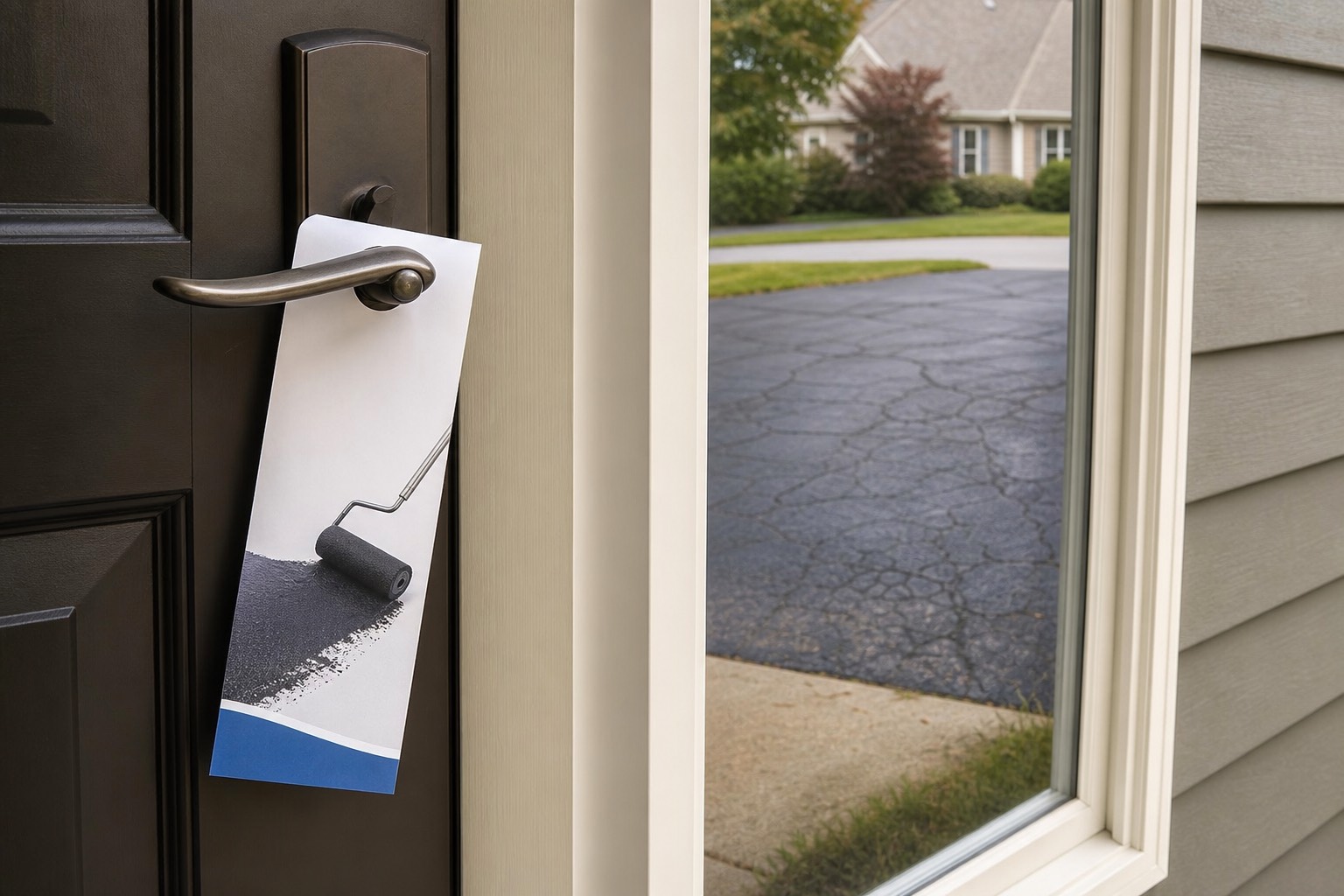
How do you vet any contractor—including the provider we arrange?
Verify the legal business name, contact, written agreement, property address, scope, exclusions, material, application rate, coats, temperature and rain rule, closure, price, payment schedule, cleanup, and change process. Ask what insurance your property requires and request current evidence from the provider. For covered North Carolina projects at or above $40,000, review the general-contractor threshold and any trade or local requirements that apply.
Check references when available, but ask technical questions a borrowed review cannot answer. How are oil-softened areas handled? What is excluded as structural failure? How are cracks cleaned? Which ASTM D6690 material is used? What is the sealer chemistry and manufacturer coverage? Who decides rain cancellation? If a provider becomes vague or pressures you to decide immediately, stop—even if we arranged the introduction.
What is the environmental case for choosing the material carefully?
USGS research identifies coal-tar-based pavement sealcoat as a potent PAH source. One study of 23 ground-floor apartments measured house-dust PAH concentrations 25 times higher beside coal-tar-sealed lots than beside concrete, unsealed asphalt, or asphalt-based sealcoat. Particles move through wear, wind, runoff, tires, and shoes.
North Carolina has no statewide coal-tar ban, so legal availability is not a safety endorsement. Charlotte, Matthews, and Mecklenburg County are listed among local North Carolina bans in the fact pack. We prefer asphalt-emulsion work, subject to the actual vendor's written product confirmation. Ask the chemistry before deciding whether any surface benefit is worth the material tradeoff.